This guide walks through what floodlight cameras actually do, the features worth paying attention to, what to expect during the security camera installation process, how today’s leading models compare, and how to pick the right one for your home. All product details below are drawn from manufacturer specifications and independent testing by outlets including Consumer Reports, PCWorld, and Security.org. Prices and lumen ratings can vary by retailer and region, so treat the figures here as a reliable starting point rather than a fixed guarantee.
What Is a Floodlight Camera?
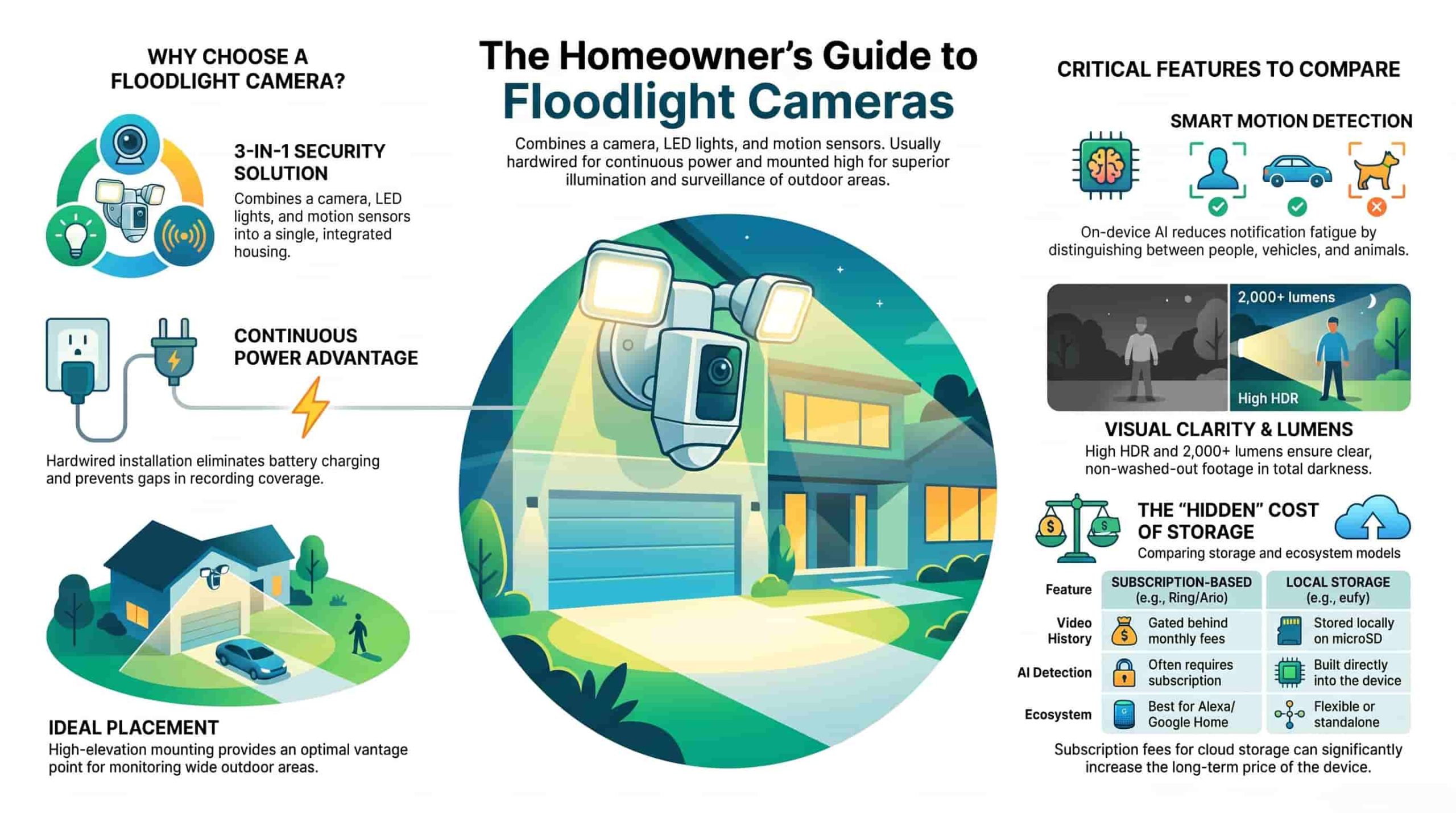
A floodlight camera combines three things in a single housing:
a security camera, one or two bright LED lights, and a motion sensor that ties them together. When the sensor detects movement, the lights switch on automatically and the camera begins recording often with a two-way audio speaker and, on many models, a built-in siren.
Most floodlight cameras are designed to replace an existing outdoor light fixture, which means they run on your home’s continuous electrical wiring rather than a battery. That’s a meaningful practical advantage. most floodlight cameras are hardwired, replacing an existing outdoor light fixture and running on continuous power, which means no battery to charge and no gaps in coverage. A smaller number of wire-free and solar-assisted models have appeared for homeowners without an existing junction box, trading some brightness for flexible placement.
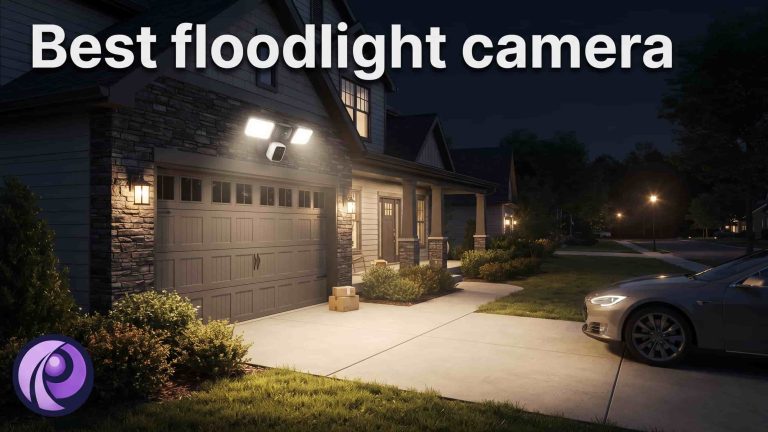
Because floodlights are typically mounted high (over a garage, along a driveway, or at the corner of a house) they tend to sit in ideal spots for a security camera too: elevated, wired for power, and facing open areas you actually want to monitor.
Key Features to Look For in the Best Floodlight Camera
Not all floodlight security cameras are built the same way. Here’s what actually affects day-to-day performance.
Video Quality
Resolution ranges from 1080p up to 4K across current models. Higher resolution helps with reading license plates or identifying faces at a distance, but HDR (high dynamic range) processing matters just as much it keeps footage from washing out when the floodlight is
on and the background is still dark. Color night vision, now common on mid-range and premium models, is generally more useful for identification purposes than traditional black-and-white infrared footage.
Motion Detection
Basic PIR (passive infrared) motion sensors can trigger false alerts from passing cars, blowing branches, or animals. Better systems use on-device AI to distinguish between people, vehicles, and animals, which cuts down on notification fatigue. Some higher-end models add zone-based detection so you can exclude a public sidewalk or a neighbor’s yard from triggering alerts.
Night Vision
Because the floodlight itself provides illumination, night vision performance on these cameras is often a genuine improvement over standard infrared-only security cameras. That said, the brightness of the floodlight (measured in lumens) directly affects how much of the scene gets lit a 2,000-lumen floodlight will illuminate a wider yard than an 800-lumen unit.
Smart Home Integration
Compatibility varies by brand. Ring integrates tightly with Amazon Alexa; Google’s
Nest Cam works best within a Google Home setup; eufy and Arlo offer broader compatibility including Apple Home, Google Home, and Alexa depending on the model. If you already own smart speakers or a video doorbell from a particular brand, staying within that ecosystem usually means a smoother setup and shared app experience.
Storage Options
This is one of the biggest practical differences between models, and one of the easiest to overlook. Some brands most notably Ring and Arlo gate video history, cloud storage, and even AI-based person detection behind a monthly subscription. Both Ring and Blink gate clip storage and person detection behind monthly plans in their standard configurations. Other brands, particularly eufy, build local microSD storage directly into the device with no subscription required for core features. If avoiding recurring fees matters to you, check the storage model carefully before buying it affects the camera’s real cost far more than the sticker price does
Best Floodlight Cameras: How the Top Models Compare
Ring Floodlight Cam Wired Pro
The Ring Floodlight Cam Wired Pro is a hardwired security camera featuring advanced 3D Motion Detection and Bird’s Eye View, which map out motion paths around your property. It provides 1080p HDR video and powerful LED floodlights to illuminate dark areas, significantly enhancing nighttime surveillance. This device is designed for seamless integration into the Ring ecosystem, offering comprehensive perimeter protection for residential homes.
eufy Floodlight Cam E340
The eufy Floodlight Cam E340 is a versatile security solution that combines 2K resolution, 360-degree pan-and-tilt coverage, and dual-lighting modes to eliminate blind spots. It distinguishes itself by offering both telephoto and wide-angle lenses for detailed zoom capabilities without compromising the broader view. With local storage options and no monthly subscription fees, it is a privacy-focused choice for comprehensive outdoor monitoring.
eufy Floodlight Camera E30
The eufy Floodlight Camera E30 provides high-definition, 2K resolution monitoring equipped with powerful, motion-activated floodlights to deter intruders and illuminate dark corners. Its primary function is to offer reliable outdoor surveillance with intelligent human dete
ction to minimize false alerts. Designed for durability and ease of use, it serves as a robust, subscription-free solution for safeguarding the exterior of a property.
Arlo Wired Floodlight Camera
The Arlo Wired Floodlight Camera is an all-in-one security device that combines an ultra-bright LED floodlight with a high-resolution camera featuring a wide 160-degree field of view. It is designed to provide clear, color night vision and includes an integrated siren for active deterrence during security events. This device is optimized for users seeking premium performance, deep integration with smart home platforms, and advanced object detection capabilities.
Google Nest Cam with Floodlight
The Google Nest Cam with Floodlight is a sophisticated security device that integrates intelligent alerts with powerful, adjustable lighting to monitor outdoor spaces effectively. It features built-in machine learning to distinguish between people, animals, and vehicles, reducing the frequency of unnecessary notifications. As part of the Google Home ecosystem, it provides seamless viewing and storage through the Google Home app, ensuring property owners stay connected at
all times.
Blink Outdoor 4 Floodlight
Tapo C615F KIT (solar)
The Tapo C615F KIT is an eco-friendly, wire-free security system powered by an integrated solar panel, ensuring continuous operation without manual charging. This system features full-color night vision and high-definition video to capture critical details in various lighting conditions. It is an ideal solution for remote areas or outdoor locations where power outlets are unavailable, providing reliable, automated surveillance through the Tapo ecosystem.
Below is a comparison of the models most consistently recommended across current testing from Consumer Reports, PCWorld, Security.org, and other independent reviewers. Prices reflect approximate list pricing and may fluctuate with sales.
| Model | Resolution | Brightness | Storage | Subscription Required? | Best For |
| Ring Floodlight Cam Wired Pro | 1080p HDR | ~2,000 lumens (dual heads) | Cloud (Ring Home plan) | Yes, for recording/history | Alexa households, overall polish |
| eufy Floodlight Cam E340 | 3K wide + 2K telephoto (dual lens) | ~2,000 lumens | Local microSD (up to 128GB) | No | Avoiding monthly fees, 360° coverage |
| eufy Floodlight Camera E30 | 2K | ~2,000 lumens | Local storage | No | Budget-conscious wired install |
| Arlo Wired Floodlight Camera | 2K HDR | 2,000 lumens | Cloud (Arlo Secure plan for full features) | Partially – basic alerts work free | Arlo ecosystem users |
| Google Nest Cam with Floodlight | 1080p | ~2,400 lumens | ~3 hours free event history, Nest Aware for more | Partially | Google Home households |
| Blink Outdoor 4 Floodlight | HD | Varies by mount | Local via Sync Module 2, or cloud subscription | Optional | Budget/simple setups |
| Tapo C615F KIT (solar) | 2K | 800 lumens | Local microSD (up to 512GB) | No | Locations without existing wiring |
A few notes worth calling out from the underlying reviews:
According to reviewer testing, the Ring Floodlight Cam Wired Pro pairs two adjustable LE
D heads producing roughly 2,000 lumens with 1080p HDR video, 3D Motion Detection with Bird’s Eye View mapping, a built-in 110 dB siren, and two-way talk. Its main limitation is that saving and reviewing recorded footage requires an active Ring Home subscription.
The eufy E340 stands out primarily for its storage model. It uses a dual-camera setup combining a 3K wide-angle lens with a 2K telephoto lens and a motorized pan-and-tilt mechanism providing full 360° horizontal coverage, with continuous 24/7 recording to a microSD card and no subscription required for storage or AI-based person, vehicle, and pet detection.
For those without existing electrical wiring at their preferred mounting spot, the Tapo C615F represents a newer category. It combines a 2K pan/tilt camera, an 800-lumen floodlight, and AI motion tracking with a solar panel, and its 10,400mAh battery is rated for up to 140 days without solar input though its floodlight brightness is notably lower than wired competitors.
It’s worth noting that lumen and resolution figures above come primarily from manufacturer specifications; independent lab testing (such as Consumer Reports’ lab evaluations) sometimes yields different real-world results for image quality and response time, so treat spec sheets as a starting point rather than the final word.
Pros and Cons of Floodlight Cameras
Pros:
- Combines lighting, recording, and (often) a siren in a single installation
- Hardwired models don’t require battery charging or replacement
- Bright light plus visible camera housing is a meaningful deterrent
- Mounting height and placement are usually already ideal, since they replace existing floodlight fixtures
- Many models integrate with existing smart home ecosystems (Alexa, Google Home, Apple Home)
- Cons:
- Most wired models require electrical knowledge or a licensed electrician for installation
- Full functionality cloud storage, AI detection, extended history is often locked behind a subscription
- Floodlights can be bright enough to bother neighbors or create glare in tight urban settings
- Hardwired units aren’t easily relocated once installed
- Video resolution on some popular models (Ring, Nest) still tops out at 1080p rather than higher resolutions offered by competitors
Buying Guide: How to Choose the Best Floodlight Camera
- Decide on wired vs. wire-free first. If you have an existing outdoor junction box, a wired unit gi
ves you continuous power, typically brighter lights, and no battery maintenance. If you don’t have wiring where you want coverage, look at solar or battery-assisted models, but expect lower lumen output.- Calculate the real cost, not just the purchase price. A cheaper camera that requires a $3–$10/month subscription for basic recording can cost more over two or three years than a pricier model with free local storage. Decide upfront whether you’re comfortable with an ongoing fee.
- Match brightness to your space. A small entryway doesn’t need a 3,000-lumen floodlight, and an oversized light can create harsh glare or annoy neighbors. Wider yards and driveways generally benefit from the 2,000+ lumen range.
- Check smart home compatibility before buying. If your household already runs on Alexa, Google Home, or Apple HomeKit, choosing a camera built for that ecosystem will save setup headaches later.
- Consider installation height and angle. According to installer guidance cited in current buying guides, floodlight cameras should be mounted roughly 9 to 10 feet off the ground and angled slightly down, high enough to deter tampering but low enough to still capture faces crossing the frame.
- Read recent, independent reviews before finalizing. Floodlight camera firmware, pricing, and subscription terms change frequently. A model rated highly a year ago may have since added new subscription requirements or been superseded by an updated version.
Conclusion
There’s no single best floodlight camera for every household the right choice depends on whether you already have outdoor wiring, how you feel about subscription fees, and which smart home ecosystem you’re already using. For homeowners who want the most complete, well-rounded package and don’t mind a subscription, the Ring Floodlight Cam Wired Pro remains one of the most consistently recommended options in current reviews. For those who want to avoid recurring costs entirely while still getting wide-area coverage, the eufy Floodlight Cam E340 stands out for its subscription-free local storage and 360° pan-and-tilt tracking. And for properties without existing electrical wiring, solar-assisted models like the Tapo C615F offer a newer, genuinely wire-free path to floodlight coverage.
Whichever model you choose, prioritize the features that matter for your actual property brightness for the size of your yard, storage that fits your budget, and compatibility with the smart home system you already use over marketing claims about being the single “best” option on the market.