Why Toronto Homeowners Choose a Dedicated Residential Installer
A general contractor or a DIY kit from a hardware store can put cameras on your walls. A dedicated residential CCTV installer does something different: we design coverage that eliminates blind spots specific to your property layout, run wiring through walls so your home looks exactly as it did before we arrived, and configure a system you can actually use from your phone without a subscription. The gap between a mounted camera and a working security system is where most homeowners run into trouble.
What sets a professional residential installation apart:
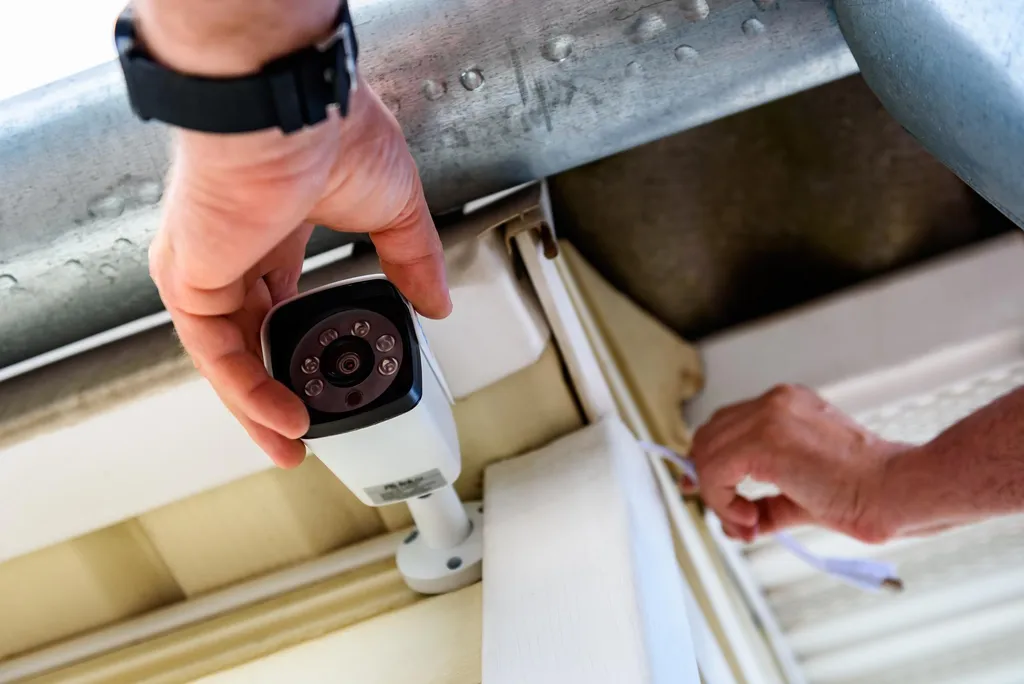
- Clean wiring through walls, attics, and crawlspaces. No surface-run cables or zip-tied bundles on your exterior.
- Camera placement that complies with Ontario privacy law. Cameras cover your property only, with placement reviewed during the site assessment.
- Condo board compliance handled for you. Interior unit cameras are unrestricted, but common-area coverage requires building approval. We know the process.
- Local NVR storage with no monthly cloud subscription. Your footage stays on a hard drive in your home, accessible from anywhere via your smartphone.
- Same-day emergency service across Metro Toronto if a camera goes offline or your NVR needs attention.
Home Security Camera Systems We Install
Not every residential property in Toronto has the same layout, wiring situation, or coverage requirements. Below are the three main property types we work with and what a well-designed residential CCTV system looks like for each.
Detached and Semi-Detached Homes
Detached and semi-detached homes in Toronto and the GTA are the most common residential installation we handle. A standard setup covers the front door and porch, driveway, rear yard, and any side entrances or gates. For most properties, four to eight IP cameras connected to a local NVR cover all critical zones without overlap.
We use Hikvision ColorVu cameras on the exterior for most Toronto homes: full-colour night footage without the washed-out look of older IR systems. Camera footage is stored locally on an NVR with a 2TB to 4TB hard drive, giving you 30 days of retention at 1080p or 4K without a subscription. Cat6 cable is run through the attic and wall cavities during installation. All holes are patched and painted. The system connects to Hikvision’s Hik-Connect app so you can watch live or review footage from your phone anywhere in the world.
Condos and Apartments in Toronto
Condo and apartment installations follow a different set of rules than detached homes. Interior cameras inside your unit have no restrictions and can cover entry doors, living areas, and parking entry points visible from your windows. Cameras covering common areas (hallways, lobby, parking garage) require condo board approval, and the documentation process varies by building.
We have installed building-wide systems in Toronto condo buildings and know the compliance requirements. For individual unit installations, we use surface-mount conduit where the building rules prohibit drilling through common walls, keeping the installation clean and reversible. A typical condo setup involves two to four cameras: front door, balcony or patio, and any secondary access points. Dahua cameras with their compact dome housings work well in residential interior environments where a low-profile installation matters.
Townhouses and Row Houses
Townhouses present a specific coverage challenge: shared walls mean you cannot run cable through some routes available in a detached home, and shared driveways require careful placement to avoid capturing a neighbour’s property. A well-planned townhouse installation accounts for all of this during the site assessment.
Coverage for a typical GTA townhouse includes the front door and walkway, the rear yard or patio, any attached garage, and the roofline at the front for driveway visibility. We route cabling through the interior where possible and use exterior conduit only where necessary. The result is a residential cctv camera system that covers every entry point without violating the privacy of adjacent properties or triggering issues with your townhouse association.
What Is Included in a Residential Installation
Every residential security camera installation we complete includes the following, with no additional charges for the items listed below:
| What You Get | What It Means |
| On-site blind spot assessment | Camera placement plan built around your property layout, lighting, and entry points. Not a template. |
| Clean wiring through walls/attic/crawlspace | No surface-run cables. All holes patched and painted to match surrounding surface. |
| NVR configuration | Recording schedules, motion zones, retention periods set to your needs. No default passwords left active. |
| Smartphone remote access | Hikvision Hik-Connect or iVMS-4200 configured on your iOS or Android device before we leave. |
| Client training (20 to 45 min) | Live viewing, playback, clip export, motion zone adjustments. Written system reference card provided. |
| 2-year installation warranty | All workmanship, equipment, and cable integrity covered. Manufacturer warranties passed through to you. |
Residential Security Camera Installation Cost in Toronto
Pricing depends on the number of cameras, the property type, cabling complexity, and whether existing coaxial cable can be reused from an older system. Below are realistic installed ranges based on residential projects we complete across Toronto and the GTA. All quotes are fixed-price with no day-of surprises.
| System | Typical Investment (CAD, fully installed) |
| 4 cameras – small home (detached/semi) | $1,200 to $1,800 incl. NVR and Cat6 |
| 8 cameras – mid-size home | $2,000 to $2,800 incl. 2TB NVR |
| 4 cameras – condo or apartment | $1,400 to $2,000 (surface conduit where required) |
| 6 to 8 cameras – townhouse | $2,200 to $3,000 incl. front, rear, and side coverage |
| Upgrade from existing coax (HD analog) | $800 to $1,400 depending on camera count |
What affects the final cost: finished walls versus open basement access (affects cabling labour), the number of floors, whether your condo building allows in-wall drilling, and whether existing coax cable from a previous system can be reused. Reusing existing coax for an HD analog upgrade saves $300 to $800 on average compared to running new Cat6.
Areas We Serve: Residential Camera Installation Across the GTA
RATA Security installs residential surveillance camera systems throughout Toronto and the surrounding GTA communities. Our most active residential service areas include:
- North York: Willowdale, Don Mills, Lawrence Park, Bayview Village
- Mississauga: City Centre, Port Credit, Meadowvale, Erin Mills
- Brampton: Downtown Brampton, Heart Lake, Bramalea, Springdale
- Markham: Unionville, Cornell, Milliken, Thornhill
- Burlington: Downtown Burlington, Alton, Orchard, Palmer