What “Wireless” Actually Means for an Outdoor Camera
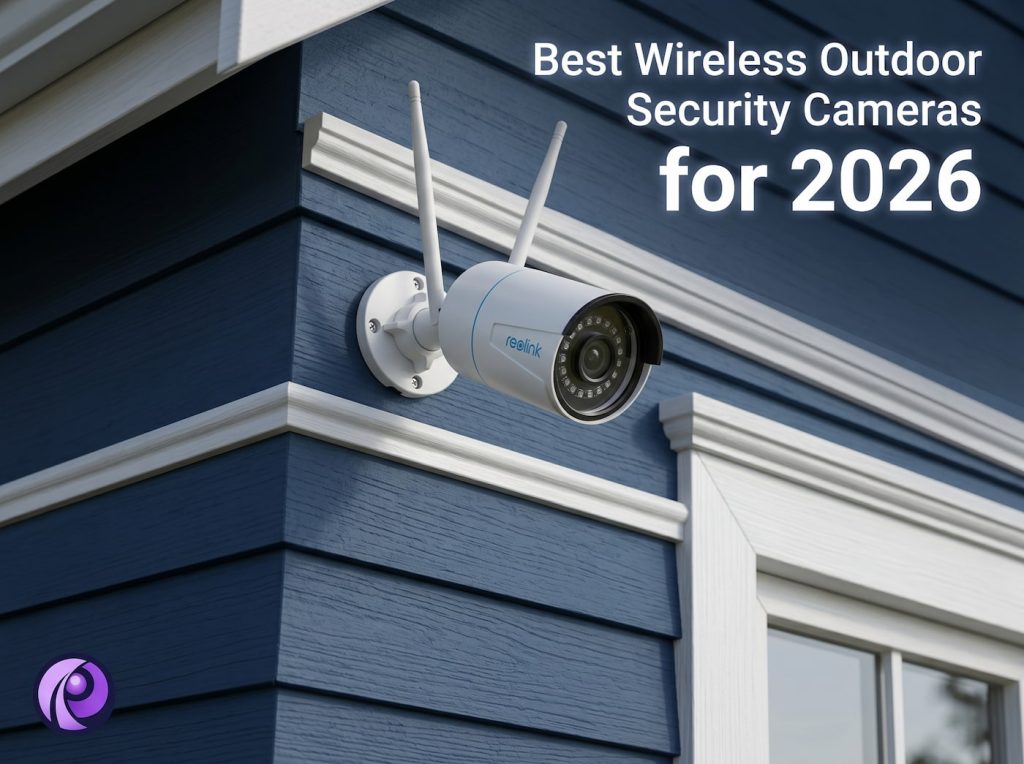
Most cameras marketed as wireless still send video over Wi-Fi, but plenty of them still need a power cable running to a nearby outlet. A truly wire-free camera needs neither a network cable nor a power cable. It runs on a removable or rechargeable battery, often paired with a small solar panel that keeps the battery topped up outdoors. The trade-off is that most battery cameras only record when motion is detected, rather than continuously, since 24/7 recording drains a battery in a day or two. The picks below are evaluated on weatherproofing, real-world battery or solar runtime, night vision range, and how accurate the motion detection is at telling a person or vehicle apart from a passing shadow or a tree branch.
The 6 Best Wireless Outdoor Security Cameras for 2026
Each pick below covers a different priority, whether that is integrating with hardware you already own, getting the sharpest night image, or keeping the upfront cost as low as possible. We led with the brands we install and support directly, since our technicians can speak to long-term reliability firsthand, and added two widely reviewed competitors to round out the comparison.
Quick Comparison: Wireless Outdoor Cameras at a Glance
| Camera | Power Source | Resolution | Hub Required | Best For |
| Ubiquiti UniFi Protect G4 Instant | Battery, optional solar | 2K | Optional (full features need UniFi Protect) | Existing UniFi networks |
| Hikvision Cable-Free / Solar Series | Battery or solar, Wi-Fi 6 | 4MP to 8MP | No | AI-grade detection |
| Dahua Solar Wi-Fi IP Camera | Solar with battery backup | 2MP to 5MP | No | Low-light clarity, energy independence |
| TP-Link Tapo C420 / MagCam | Battery (up to 300 days) | 2K QHD | No | Budget and long battery life |
| Reolink Altas PT Ultra | Battery (20,000mAh), solar compatible | 4K / 8MP | No (Home Hub needed for 24/7 recording) | Wide-area pan-tilt coverage |
| eufy SoloCam S340 | Dual solar panels | 3K | No | Zero monthly fees |
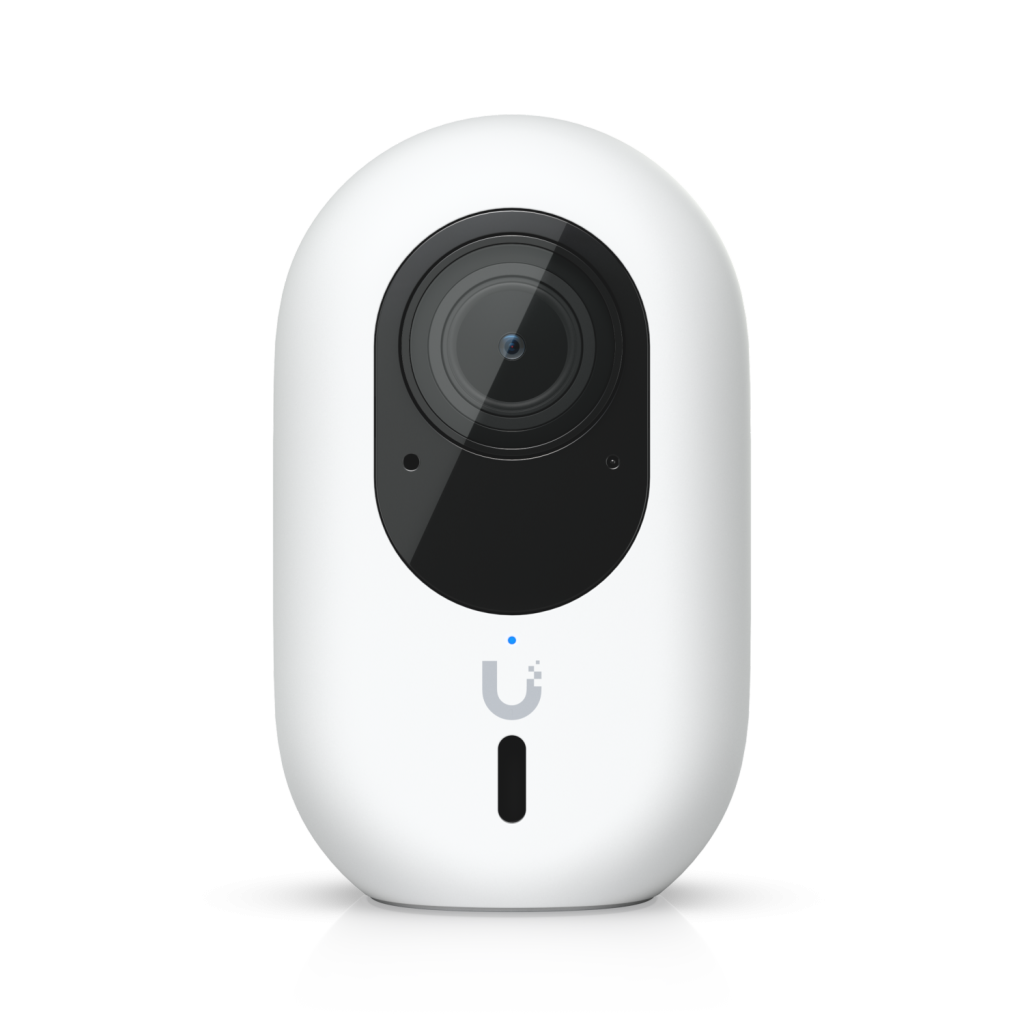
1. Ubiquiti UniFi Protect G4 Instant: Best for Existing UniFi Networks
-
- Resolution: 2K with infrared night vision up to 20 feet
- Power: Removable battery with a magnetic, tool-free mount; optional solar accessory
- Hub: Works standalone over Wi-Fi; full Protect features need a UniFi Protect console or gateway
- Best for: Properties that already run UniFi access points or a UniFi gateway
If a property already has Ubiquiti networking equipment installed, the G4 Instant slots directly into the same UniFi Protect app used for every other camera on site, with no separate login or subscription. It mounts magnetically in seconds and can be repositioned without drilling new holes, which makes it a strong fit for a side yard or a detached structure where running power was never part of the plan.
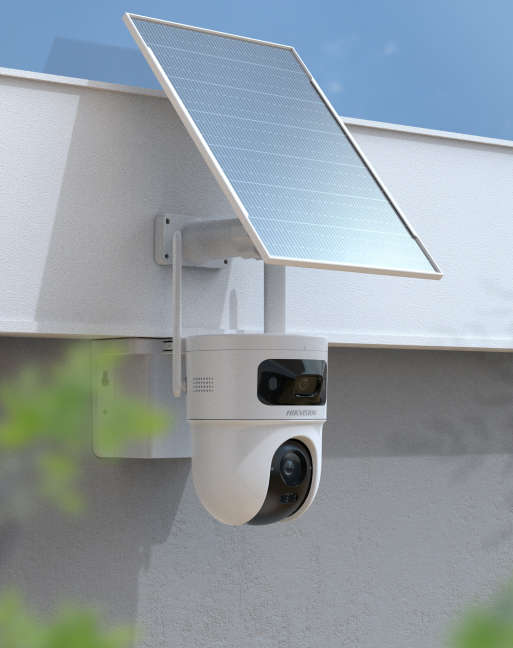
2. Hikvision Cable-Free / Solar Series: Best for AI-Grade Detection
- Resolution: 4MP to 8MP depending on model
- Power: Built-in battery or always-on solar charging; Wi-Fi 6 support on newer units
- AI features: AcuSense person and vehicle classification to cut false alerts
- Best for: Buyers who want commercial-grade AI detection without running a cable
Hikvision built its Cable-Free and Solar-Powered lines specifically for sites where a conduit run is impractical, such as a parking lot entrance, a construction trailer, or a perimeter fence line. The AcuSense AI chip is the same technology used in Hikvision’s wired camera lineup, so the false-alarm reduction carries over even though the camera has no cable attached.
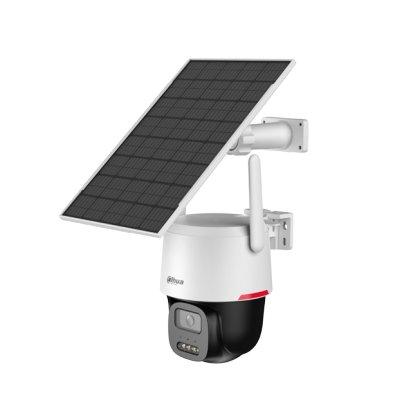
3. Dahua Solar Wi-Fi IP Camera: Best for Low-Light Clarity and Energy Independence
- Resolution: 2MP to 5MP
- Power: Integrated solar panel with battery backup for overnight coverage
- AI features: WizMind analytics with Starlight low-light sensor
- Best for: Shaded or partly shaded outdoor areas that still get a few hours of sun
Dahua’s Starlight sensor, carried over from the Dahua systems we install across the GTA, keeps footage usable in near-darkness without relying entirely on infrared. Paired with a solar panel, this line is a practical option for a backyard or laneway where the camera gets indirect sun for part of the day rather than full exposure.
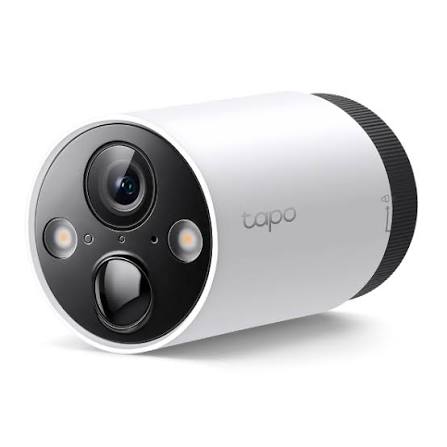
4. TP-Link Tapo C420 / MagCam: Best for Budget and Long Battery Life
- Resolution: 2K QHD
- Power: Rechargeable battery rated for up to 180 to 300 days per charge depending on the model
- Storage: Local microSD or optional cloud, no subscription required for basic use
- Best for: Homeowners who want a reliable wireless camera without a high upfront cost
The Tapo C420 and the magnetic-mount MagCam line, both part of the TP-Link lineup we carry, combine a starlight night vision sensor with a battery that realistically lasts months between charges. They are an easy recommendation for a front porch or a side gate where the budget does not stretch to a full commercial-grade unit.
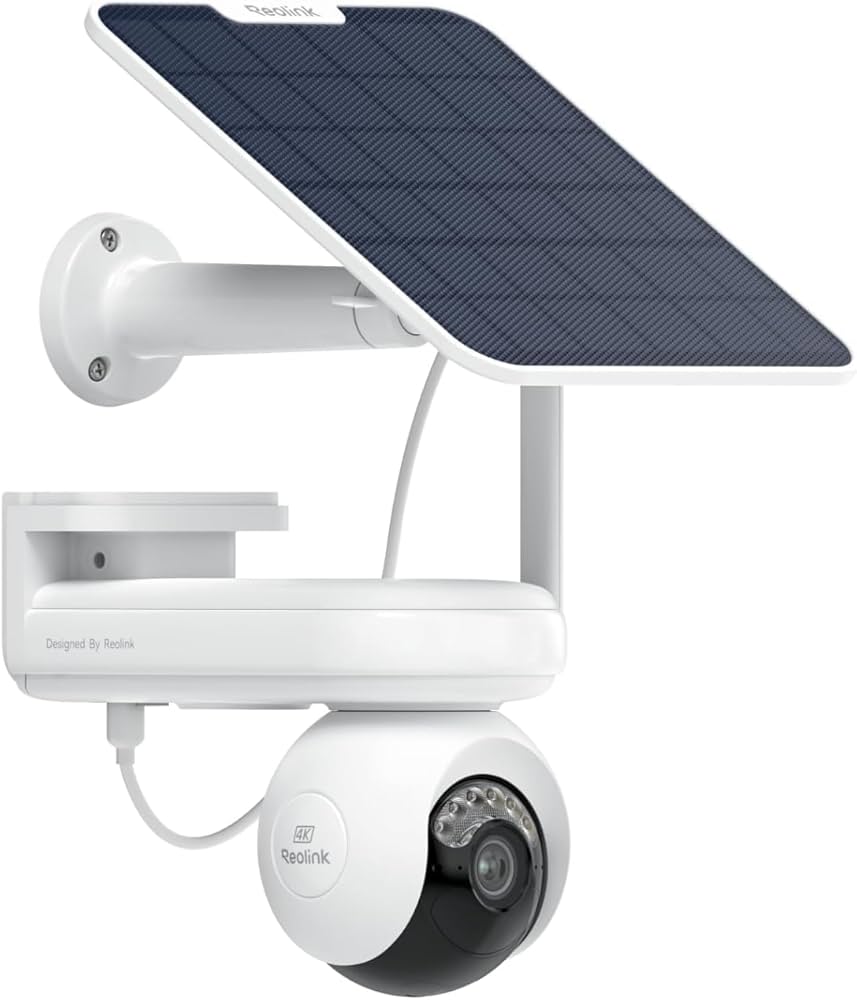
5. Reolink Altas PT Ultra: Best for Wide-Area Pan-Tilt Coverage
- Resolution: 4K (8MP) with a 355-degree pan and 90-degree tilt range
- Power: 20,000mAh battery, solar panel compatible
- Storage: microSD up to 512GB; continuous recording requires the optional Reolink Home Hub
- Best for: Driveways, large yards, or open lots that need to swing the lens rather than rely on a single fixed angle
The Altas PT Ultra is not a brand we install directly, but it is one of the few battery cameras that can pan and tilt across a wide area instead of staring at a single fixed frame, which makes it worth including for a large property with one camera trying to cover several angles.
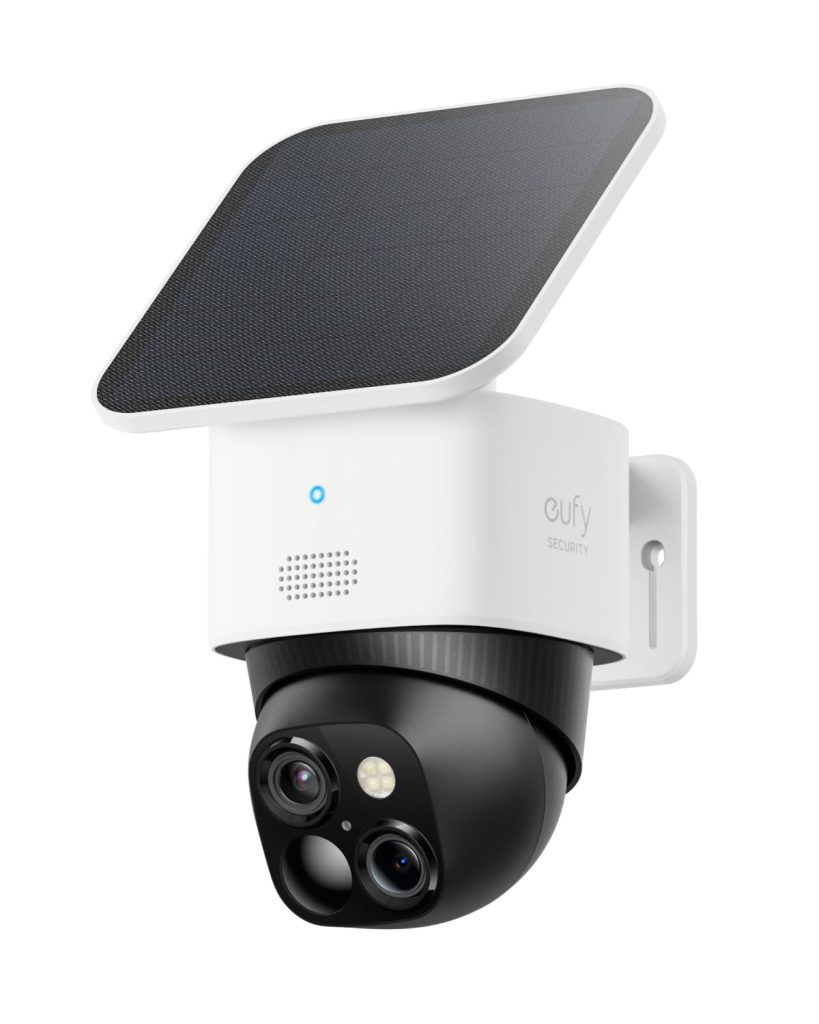
6. eufy SoloCam S340: Best for Zero Monthly Fees
- Resolution: 3K with a wide-angle and a telephoto lens
- Power: Dual solar panels built into the housing
- Storage: Local storage included, no subscription required
- Best for: Owners who specifically want to avoid any ongoing cloud storage fee
The SoloCam S340 leans on local storage rather than a cloud plan, which keeps the long-term cost down to the price of the camera itself. Its dual solar panels mean it rarely needs to come down for a manual charge once it is mounted in a sunny spot.
Wireless vs. Wired: Which Should You Choose for Your Toronto Property?
A wireless camera is the right call when speed and flexibility matter more than continuous recording, for example a rental property between tenants, a detached shed, or a temporary setup while a permit or conduit job is scheduled. A wired NVR system is still the better long-term investment for full property coverage, since it records continuously without a subscription, never needs a battery swap, and scales cleanly to eight, sixteen, or more cameras on one local recorder.
When wired still wins
If a property needs more than two or three cameras, runs them around the clock, or already has the walls open for other work, a professional residential security camera installation or commercial security camera installation with clean Cat6 wiring and a local NVR almost always works out cheaper per camera and more reliable over a five-year horizon than a fleet of battery units that each need periodic charging.
Final Recommendation
For most Toronto properties already on a Ubiquiti network, the UniFi Protect G4 Instant is the easiest fit. For a buyer who wants the most AI accuracy without compromise, Hikvision’s Cable-Free and Solar series leads the group. For a tight budget, the TP-Link Tapo C420 covers the basics reliably without a steep price tag.
Not sure which setup makes sense for your specific property? Our technicians can assess your site and recommend wireless, wired, or a mix of both. Request a free quote and we will respond within 24 hours with a written, fixed-price recommendation.