











Why Toronto Properties Run DSC
DSC’s position in this market is not an accident of marketing. The company introduced the first compact microprocessor based alarm panels and keypads, expanded through the acquisition of Sur-Gard for central station monitoring equipment and Bentel in Italy, was acquired by Tyco, and since the 2016 Tyco and Johnson Controls merger has operated as part of Johnson Controls. It remains one of the most widely deployed alarm platforms in North America, which for a Toronto property owner translates into two practical advantages: almost any alarm company can service it, and parts and sensors are readily available rather than proprietary to one dealer.
- Founded in Toronto in 1979, with the deepest installed base of any alarm platform in the GTA
- Hybrid architecture, hardwired and wireless zones on the same panel, so existing wiring is reused rather than abandoned
- PowerG wireless with 128 bit AES encryption, two way communication, and frequency hopping
- PowerG camera devices for visual alarm verification, including outdoor models
- Alarm.com ready communicators for app control, notifications, and remote arming
- Open dealer platform, so you are not locked to a single monitoring company for the life of the system
- Scales from a small condo through to commercial sites with hundreds of zones and multiple partitions
DSC Systems We Install in Toronto
DSC’s current range splits cleanly by property size and by whether the site needs hardwired zones, wireless, or both. The choice usually comes down to how much existing wiring is in the building and how many independent areas need to arm separately. We confirm panel, zone count, and device mix during the free site assessment.
PowerSeries Neo: Homes, Condos, and Small Commercial
Neo is the platform we install on the majority of Toronto jobs. It is a hybrid system supporting a large number of hardwired and wireless zones with multiple partitions, which means a single panel can protect a house, or a house with a basement apartment armed separately, or a small commercial unit.
- Best for: detached and semi homes, townhouses, condos, small retail and office units
- Typical Toronto use: a house with a separate basement suite, arming independently on two partitions so tenant and owner never disarm each other’s zones
- Touchscreen and LCD keypads, plus full app control through an Alarm.com communicator
PowerSeries Pro: Commercial and Multi Building Sites
Pro is the commercial grade platform, built for large scale installations and supporting up to 248 zones. It was the first commercial grade system to carry PowerG long range wireless, which is what makes it viable on sites where running cable between structures is impractical.
- Best for: warehouses, office buildings, factories, healthcare facilities, and educational sites
- Supports high cyber protection and encryption standards without requiring a wired communication path
- One control panel can handle detectors across multiple buildings on the same site
PowerG Wireless: Retrofit Without Opening Walls
PowerG is the reason a professional alarm system is now realistic in Toronto properties where it previously was not, particularly century homes, finished basements, and heritage properties where fishing cable through plaster is destructive and expensive.
- Best for: older Toronto housing stock, finished interiors, condos, and detached garages or outbuildings
- Long transmission range, so a garage or rear structure reports back to the panel reliably
- Two way communication means the panel confirms each sensor is alive rather than assuming silence is good news
Sensors and Detection Devices
The panel is only as good as what is connected to it, and this is where most underspecified systems fail. A system with contacts on the front and back door alone is trivially defeated through a window.
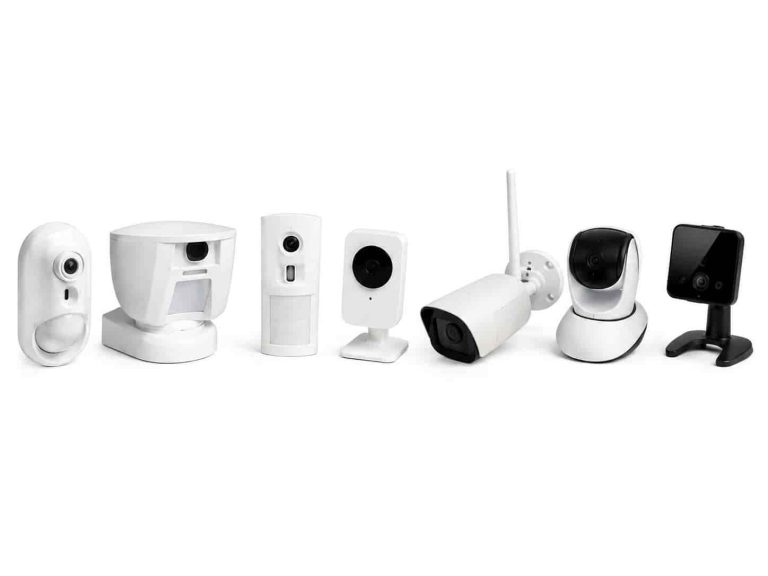
- Door and window contacts, glass break detectors, and pet immune motion sensors
- Environmental protection including smoke, carbon monoxide, water, and low temperature sensors, which matter in Toronto winters for burst pipe and furnace failure detection
- Panic and duress functions, and hold up devices for retail
- Curtain and outdoor motion detectors for perimeter and approach coverage
DSC Cameras and Visual Alarm Verification
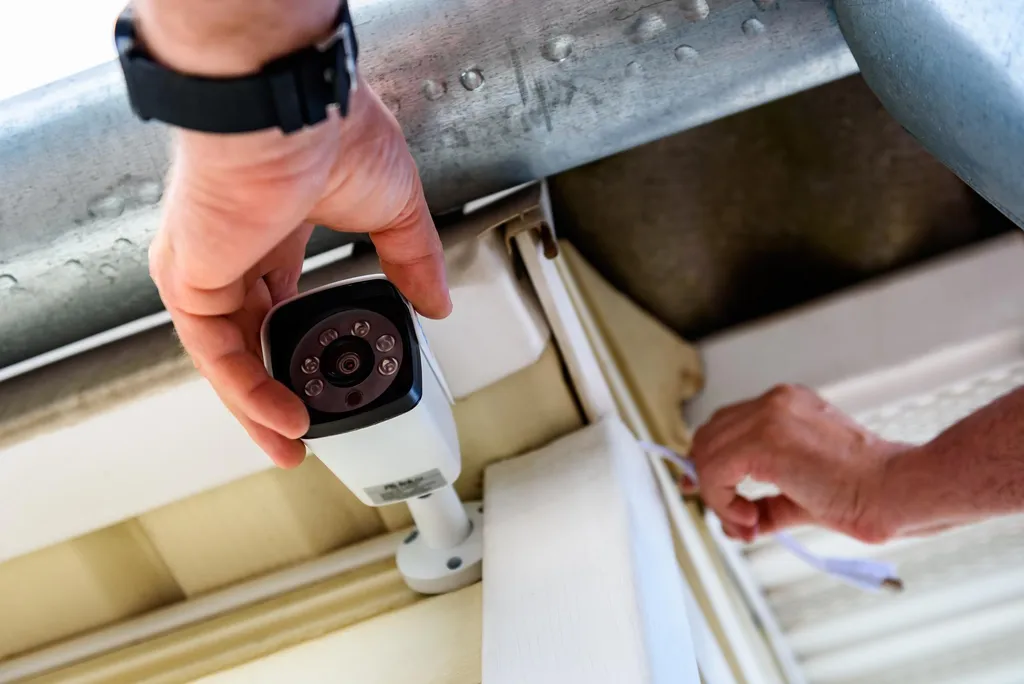
DSC does make cameras, and they are one of the most useful and least understood devices in the range, so it is worth being precise about what they are before explaining why they matter. A DSC PowerG camera is a motion detector with an integrated camera built into it. It is not a surveillance camera. It does not record continuously, it does not provide live streaming, and it is not a replacement for CCTV. What it does instead is solve a specific and expensive problem: proving that an alarm signal is a real intrusion.
When the system is armed and the PIR element detects movement, the device wakes the camera, captures a sequence of images, and transmits them over ethernet or cellular to the monitoring centre. An operator then looks at actual pictures of what triggered the alarm and decides whether to dispatch. That is the entire purpose, and in a city with an active false alarm fee framework it is worth real money.
PG9934P: Indoor PIR Camera
The indoor unit is the one we install most. It captures full colour images in daylight and uses infrared illumination to keep working in complete darkness, with instant capture so the sequence begins the moment the detector triggers rather than several seconds later when the intruder has moved out of frame.
- Detection range approximately 39 feet, with infrared illumination reaching approximately 32 feet
- Operates in total darkness, which is when the great majority of intrusions occur
- Battery powered with typical life measured in years, no wiring required
- Pet tolerant version available for animals up to roughly 85 pounds
- Best placement: main circulation areas, the room a burglar must cross, and the area covering a safe or till
PG9944: Outdoor PIR Camera
The outdoor unit extends the same verification capability to the perimeter, which changes the timing of the entire response. Instead of confirming an intruder once they are inside, the monitoring centre sees them in the side passage or the rear yard.
- Best for: rear yards, side passages, driveways, and approach paths
- Verification before entry rather than after, which materially improves response value
- Wireless, so it deploys on properties where running outdoor cable is impractical
PowerG+ Camera Detectors: Higher Resolution and Peek In
The newer PowerG+ generation raises image quality and adds a peek in capability, which lets an authorised user request a current image on demand rather than only receiving one after an alarm.
- Higher resolution for verification images, with a further increased resolution for peek in
- Temperature reporting from the device, useful for unoccupied properties in winter
- Optional external power where continuous availability matters
How These Devices Behave on Your System
Two practical points that installers frequently fail to explain, and that we would rather you know before you buy.
- Images are captured only while the system is armed and the device is not bypassed. This is a deliberate privacy protection, not a limitation, and it is what makes indoor cameras acceptable in a home
- The device captures a short sequence of images that the panel assembles into a stop motion style clip, with each frame also viewable individually. It is not continuous video
- Behaviour differs by panel. On PowerSeries Neo these devices provide visual verification, while on some other compatible panels they integrate more fully with the monitoring platform. We confirm exactly what your panel will do before quoting
Verification Cameras Compared With CCTV
Because this is the single most common source of confusion on this brand, here is the comparison directly. These are complementary technologies, not competing ones, and most properties we secure properly end up with both.
| Capability | DSC PowerG camera | CCTV camera and NVR |
| Continuous recording | No | Yes, 24 hours a day |
| Live viewing on demand | Peek in only, on supported models | Yes, any time |
| Captures when system is disarmed | No, by design | Yes |
| Sends images to monitoring centre on alarm | Yes, this is its core function | Not without a separate monitoring service |
| Reduces unverified dispatches | Yes, directly | Only with monitored video service |
| Evidence of an event you did not know about | No, only alarm events | Yes, reviewable after the fact |
| Power and cabling | Battery, wireless | PoE or coax, wired |
| Answers the question | Is this alarm real, right now | What happened, and who did it |
Put plainly: the verification camera exists to make the alarm response credible in the moment, and the CCTV system exists to give you the record afterwards. If you install only the alarm, you get a response you cannot substantiate. If you install only cameras, you get an excellent account of an incident nobody interrupted.
Taking Over an Existing DSC Panel in Toronto
This is the request we get most often on this brand, and it is worth its own section because most Toronto property owners do not realise it is an option. If your building already has a DSC panel, you almost certainly do not need a new system. You need the existing one taken over, reprogrammed, and brought current.
Orphaned and Locked Panels
Panels get abandoned constantly, when a monitoring company exits the market, when a contract ends, when a previous owner leaves and takes nothing but the code with them. A locked panel that nobody can program is not scrap, it is a system waiting to be reclaimed. We take over existing DSC panels, reset installer access properly, reprogram zones to match how the property is actually used now, and put you back in control of who monitors it.
Dead Communicators After Cellular Network Shutdowns
A great many Toronto systems went silent without their owners noticing, because the cellular communicator was built for a network generation that has since been retired. The keypad still lights up, the siren still sounds locally, and nothing at all reaches a monitoring centre. If your system has not been tested against the monitoring station recently, assume nothing until it is verified. Replacing the communicator is far cheaper than replacing the system.
Adding Verification Cameras to an Existing Panel
If your Neo or Pro panel is sound, adding PowerG camera detectors is usually a straightforward upgrade requiring a PowerG transceiver rather than a new system. For a property that has been generating unverified alarms, this is frequently the highest value change available, and it costs a fraction of a replacement.
Monitoring, Toronto Bylaws, and False Alarms
Two local realities shape how an alarm system should be configured in Toronto, and both are routinely ignored by installers who work to a national template.
The first is monitoring. A local siren alerts neighbours who mostly assume it is a malfunction. Monitored alarms connect to a central station that verifies and dispatches. If a system is going to be monitored, the monitoring centre should be ULC listed, which is the Canadian standard that insurers and commercial policies typically reference, and it is worth confirming before signing any monitoring agreement.
The second is false alarms. The City of Toronto and Toronto Police Service operate an alarm registration and false alarm framework, and repeated unverified false dispatches carry escalating consequences and fees. This is exactly the problem the verification cameras above are built to solve, and it is why we recommend them on any property with a history of false activations. Alongside that, correct configuration does most of the work: properly sited motion detectors that ignore pets and heating vents, entry and exit delays that match how the household actually moves, and glass break sensors positioned away from noise sources. We configure to minimise false activations and register the system correctly at handover. Verify current registration requirements and fees with the City before finalising a monitoring arrangement.
DSC Compared With Self Monitored Alternatives
Most Toronto buyers weighing an alarm system are really choosing between a professional platform and a consumer smart home kit. Both are legitimate for different situations, and here is the honest comparison.
| Consideration | DSC PowerSeries | Consumer smart alarm kit |
| Installation | Professionally installed and configured | Self installed |
| Wired zone support | Yes, reuses existing building wiring | Wireless only |
| Wireless protocol | PowerG, 128 bit AES, two way, long range | Varies, often shorter range and one way |
| Visual alarm verification | Yes, indoor and outdoor PIR cameras | Rare, usually app clips only |
| Partitions | Multiple independent areas on one panel | Usually single area |
| Professional monitoring | Central station, ULC listed options available | Optional, varies by vendor |
| Commercial scale | Up to hundreds of zones, multi building | Not designed for it |
| Service portability | Any qualified dealer can service the panel | Locked to one vendor ecosystem |
| Best fit | Owned property, multi unit, commercial, insurance driven | Renters and small single area spaces |
Put plainly: if you rent a one bedroom condo and want a deterrent you can take with you, a consumer kit is sensible and we will say so. If you own the property, have a basement suite, run a business, or your insurer asks what system is installed, DSC is the correct specification.
DSC Recommendations by Toronto Property Type
Here is how we typically scope DSC systems across the property types we see most in Toronto. Every quote is confirmed after an on site survey.
| Property Type | Recommended DSC Setup |
| Detached or semi home | PowerSeries Neo, contacts on all ground floor openings, motion in main circulation, glass break at rear, one indoor PIR camera on the main floor |
| Home with basement suite | Neo with two partitions, independent arming, shared environmental sensors |
| Condo or apartment | Compact Neo or wireless configuration, entry contacts, motion, water sensor |
| Retail unit | Neo with hold up device at till, glass break on storefront, indoor PIR camera covering the till area for verification |
| Office or clinic | Neo or Pro with partitions per suite, after hours arming schedules, verification cameras at main entries |
| Warehouse or multi building site | PowerSeries Pro with PowerG across structures, outdoor PIR cameras on approach paths, perimeter and interior zones |
| Property with repeated false alarms | Detector re siting and sensitivity correction plus PIR cameras for verification before dispatch |
Professional DSC Installation Across Toronto
Our process is the same on every alarm job. We survey the property and map how it is actually used, not just its floor plan, since entry and exit routines determine where delays and zones belong. We install the panel in a protected location rather than beside the front door where it can be attacked before it reports. We run hardwired zones where cabling is practical and use PowerG where it is not, position verification cameras to cover the path an intruder must take rather than the doorway they enter through, configure partitions, delays, and sensitivity around the household or business routine, set up app access and notifications, verify communication with the monitoring centre by live test, and train every person who will use the system before we leave. Every installation carries a two year workmanship warranty, and manufacturer warranty on the equipment is passed through to you.
Where a property also has surveillance cameras, we specify the two together so that an intrusion event and the footage of that event line up in time, which is what turns an alarm signal into something an insurer or Toronto Police Service can act on. Same day emergency service is available across Toronto and the wider GTA. Wherever you need a reliable security camera in Toronto alongside intrusion detection, our team installs and services both.
Toronto Areas We Serve
RATA Security installs, takes over, and services DSC alarm systems across Toronto and the surrounding GTA, including:
- Downtown core, Financial District, and King West
- Liberty Village, Queen West, and Kensington
- Leslieville, Riverdale, and the Danforth
- Yonge and Eglinton, Midtown, and Forest Hill
- North York, Willowdale, and Don Mills
- Etobicoke, Mimico, and The Junction
- Scarborough, Agincourt, and Birchmount
- Commercial and industrial properties across the city