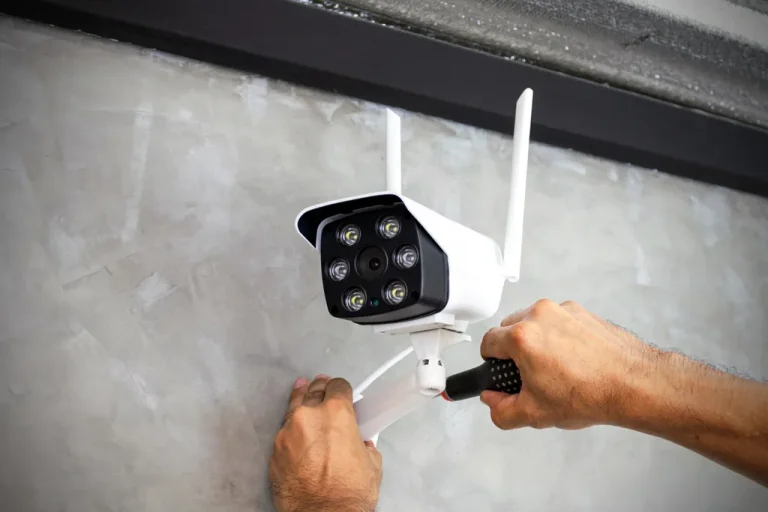
Whether you are securing a commercial facility or a residential property, this expert guide breaks down the essential hardware, infrastructure, legal guidelines, and cost expectations you need to consider before deployment.
Core Hardware: CCTV Camera Requirements
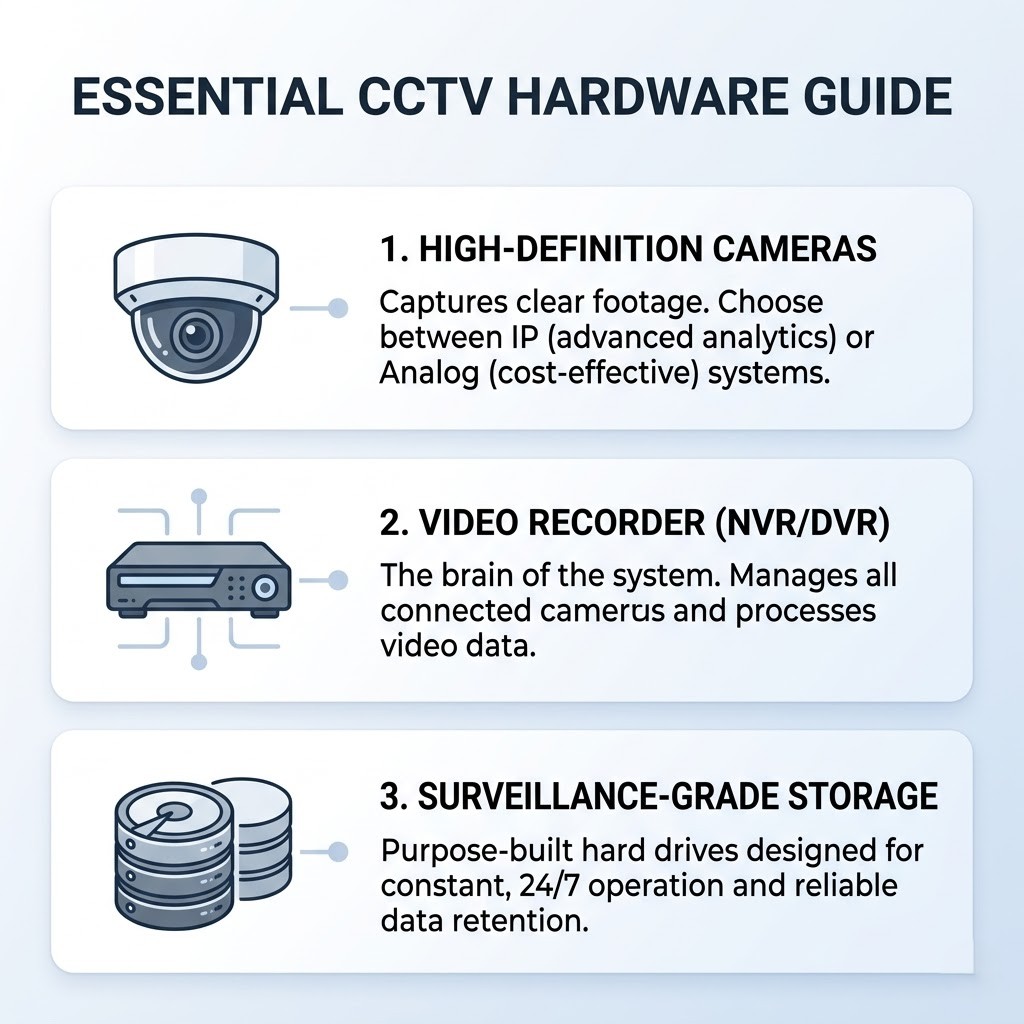
The foundation of any robust security system lies in its hardware. Selecting the right equipment dictates the clarity of your footage and the reliability of your system.
- High-Definition Cameras: Decide between IP (Internet Protocol) cameras for high-resolution analytics or Analog systems for cost-effective, basic monitoring.
- Video Recorders (NVR/DVR): Network Video Recorders (for IP) or Digital Video Recorders (for Analog) are the brains of the operation.
- Surveillance-Grade Storage: Standard PC hard drives will fail under 24/7 continuous writing. You need purpose-built surveillance drives with high terabyte capacities.
Essential Infrastructure: Things Needed to Install CCTV Camera
Beyond the lens, the backbone of your system relies on seamless connectivity and power. Here are the crucial things needed to install cctv camera networks effectively:
- Cabling: IP cameras require Cat5e or Cat6 Ethernet cables, while analog systems use RG59 coaxial cables.
- Power Supply (PoE): Power over Ethernet switches simplify installation by sending both data and power through a single cable. Always include an Uninterruptible Power Supply (UPS) to keep cameras running during power outages.
- Bandwidth: High-resolution 4K streaming demands a robust local network. Ensure your router can handle the bitrate without causing latency.
Strategic Placement and Environmental Factors
Even the best cameras are useless if they are pointing in the wrong direction or blinded by the elements.
- Field of View (FoV): Select the correct focal length (e.g., 2.8mm for wide angles, 4mm for narrower, focused shots) to eliminate blind spots.
- Weather and Vandal Resistance: Outdoor units must have an IP66 or IP67 weatherproofing rating. For high-traffic or vulnerable areas, look for IK10 vandal-proof housings.
- Night Vision: Infrared (IR) or modern full-color night vision technologies are mandatory for low-light environments.
Legal Considerations and Privacy Compliance
When executing a security camera installation in toronto, or any major jurisdiction, strict adherence to privacy laws is non-negotiable. You cannot record areas where individuals have a “reasonable expectation of privacy,” such as washrooms or neighboring private properties. Additionally, clearly visible signage is often legally required to notify the public that 24/7 video and audio surveillance is in progress.
Cost Estimation: What to Expect
Understanding the financial investment is a crucial part of your planning phase. While exact figures depend on the scale of the project, here is a general breakdown of expected costs for a professional setup:
| System Component | Estimated Cost Range (CAD) | Notes |
|---|---|---|
| Basic Residential Kit (4 Cameras) | $500 – $1,200 | Entry-level IP or Analog kits, excluding professional labor. |
| Commercial Grade System (8+ Cameras) | $1,500 – $5,000+ | High-resolution NVR, advanced analytics, and heavy-duty storage. |
| Professional Installation Labor | $100 – $200 per camera | Varies based on cabling complexity and wall/ceiling materials. |
Secure Your Property with RATA Security
Navigating cabling, storage calculations, and privacy laws can be overwhelming. A professional touch ensures your system is optimized, compliant, and ready to protect what matters most.
If you’re ready to upgrade your surveillance infrastructure with zero guesswork, our expert technicians are here to help. Contact us today at or reach out through our contact page to schedule your comprehensive site assessment and get a customized security plan.